


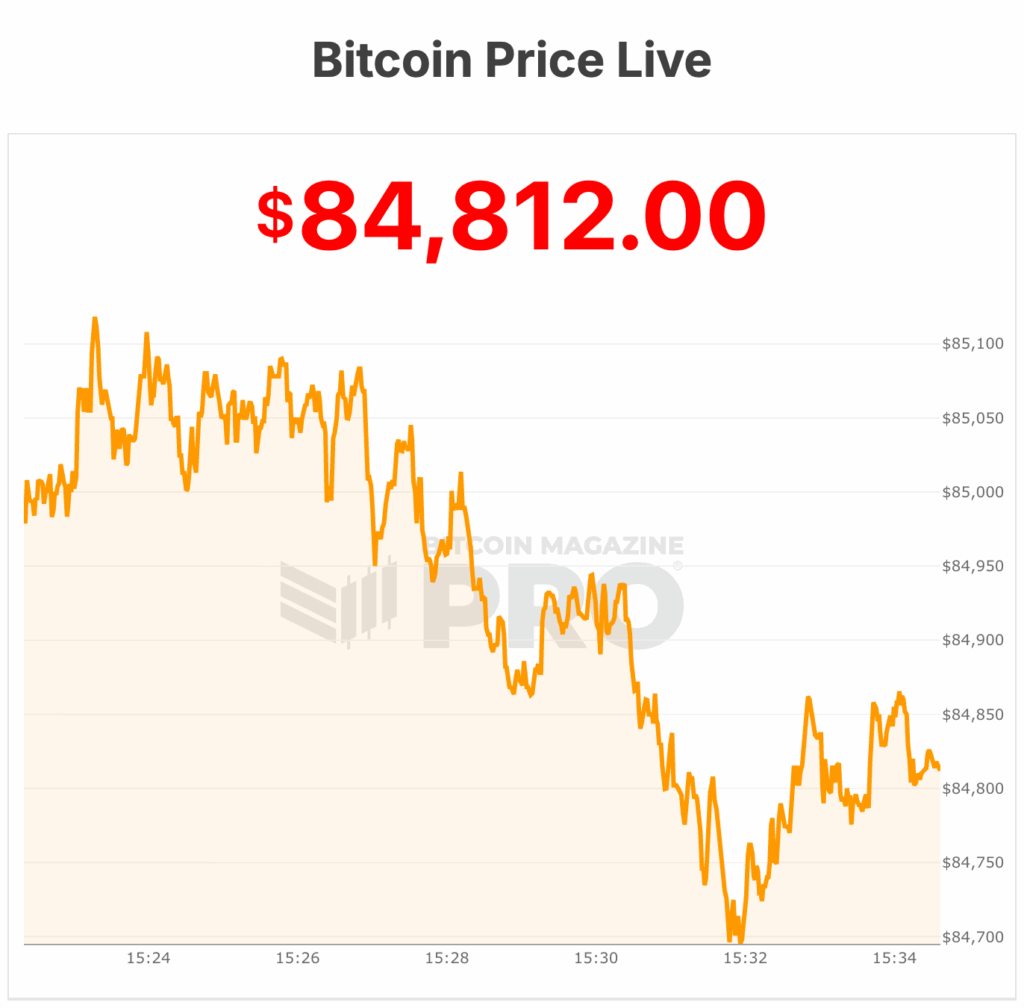
Today, Bitcoin experienced a significant decline in value, retracting sharply to $84,544 after a brief peak nearing $90,000. This downturn marks the continuation of a price sell-off that has persisted for two months.
This price decline follows a brief rally that pushed Bitcoin to the $89,000 mark, spurred by newly released Consumer Price Index data from the U.S., which indicated that inflation rose 2.7% year-over-year in November, falling below expectations. Core CPI, which excludes food and energy, dropped to 2.6%, representing the lowest figure since early 2021.
As a result, Bitcoin surged from intraday lows near $86,000, briefly challenging the $89,000 threshold. Traders interpreted the cooler inflation report as a potential signal for a more accommodative Federal Reserve policy in 2026. CME FedWatch data suggested a slight increase in the likelihood of a rate cut by March, although adjustments in January remain improbable.
However, this upward momentum was not sustainable. Bitcoin’s price struggled to exceed $90,000 and subsequently fell to $84,400. This trend of rapid spikes followed by quick retracements has become increasingly evident.
What’s Contributing to the Decline in Bitcoin Price?
A primary concern affecting Bitcoin’s price is the performance of U.S.-listed spot Bitcoin ETFs. Once a significant source of demand, these funds have recently experienced net redemptions, which has eroded institutional support and contributed to price volatility. Without consistent inflows into ETFs, sustaining breakouts above the $89,000 level has become more challenging.
Additively, broader economic indicators have introduced uncertainty. Recent labor market data revealed an increase in U.S. unemployment to 4.6%, its highest level since 2021, with job growth remaining inconsistent. These mixed signals complicate Federal Reserve policy, indicating a cautious approach in light of easing inflation.
Political factors further complicate market dynamics. President Donald Trump has publicly advocated for reduced interest rates and hinted at the potential nomination of a Fed chair who would support aggressive monetary easing. Although the markets appear to regard these statements as background noise, they nonetheless introduce additional variables into the macroeconomic landscape.
From a technical perspective, Bitcoin’s price currently exhibits a consolidating pattern rather than a clear trend. Resistance is forming just below the $90,000 mark, with a robust supply above this level maintained by investors who acquired their holdings during earlier rallies.
Analysts at Bitwise have recently posited that Bitcoin may break away from its traditional four-year cycle. They noted that Bitcoin could potentially achieve new all-time highs in 2026, characterized by lower volatility and diminished correlation to equity markets.
The Bitcoin Fear and Greed Index presently registers at 17/100, a sign of extreme fear. Historically, readings in this vicinity have corresponded with undervaluation. While contrarian investors may perceive potential buying opportunities, prevailing sentiment remains cautious.
Is $70,000 the Next Target?
The price may indeed decline to the $72,000–$68,000 support zone upon breaching the $84,000 mark, with bearish sentiment dominating the market. A notable recovery from this lower zone is likely, which could facilitate a retest of $84,000. Nonetheless, the four-year cycle suggests that additional downside may be forthcoming later in 2026.
In the short term, momentum appears to favor sellers. Last week, Bitcoin’s price concluded the weekly candle in negative territory, failing to maintain gains near $94,000. Bears are positioned to further drive prices down this week.

Thank you for visiting our site. You can get the latest Information and Editorials on our site regarding bitcoins.

