


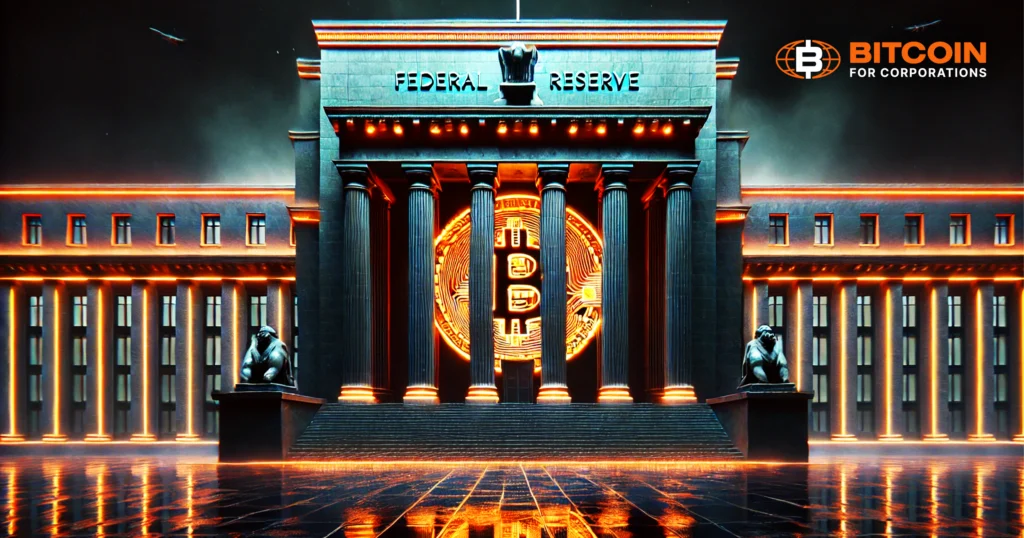
The Federal Reserve Board has announced a trio of proposals aimed at modernizing the U.S. capital framework, which, if accepted, could significantly impact the cost and availability of institutional Bitcoin services. While the 14-page Board memorandum delves into the specifics of the “Basel III Endgame” and “GSIB surcharges,” this analysis posits that the most transformative aspect for corporate treasuries lies within the proposed recalibration of operational risk.
1. Eliminating the “Toxic Asset” Capital Barrier
Historically, corporations seeking to hold Bitcoin through traditional banking channels have faced significant obstacles due to “advanced approaches” to capital requirements. These internal, model-based evaluations frequently resulted in disproportionately high capital charges for digital asset transactions, categorizing them as “toxic” on a bank’s balance sheet. Under earlier interpretations of the Basel SCO60 standard, specific digital assets incurred a risk weight of 1,250%. This proposal aims to move beyond such models by advocating for the complete elimination of advanced approaches for Category I and II firms. In their stead, the Fed proposes a unified, “expanded risk-based approach” that is designed to enhance consistency and sensitivity to risk across all asset classes.
In practical terms, the combination of a 1,250% risk weight and an 8% minimum capital ratio results in a 100% capital requirement. This “dollar-for-dollar” mandate renders bank intermediation economically unviable, functioning as a de facto prohibition rather than as a measure of objective risk management. The current proposal recommends the complete removal of advanced approaches for Category I and II firms, introducing a single, “expanded risk-based approach” that is intended to be more coherent and risk-sensitive.
2. A Significant Advancement for “Custody Services”
Crucially, the proposed framework for operational risk is intended to “appropriately reflect business activities” and explicitly identifies custody services as a pivotal area for recalibration. Fed staff have indicated that elements of the previous framework resulted in “excessive requirements for traditional banking activities.”
If Bitcoin custody is incorporated under this broader service definition, it would enable Tier 1 banks to offer these services without the prohibitive capital overhead that has historically inflated costs for corporate clients. By aligning operational risk requirements for custody more closely with actual historical risk, the Fed signals a shift away from punitive weights as a normative standard.
3. A 4.8% Liquidity Injection and G-SIB Indexing
In line with maintaining structural integrity, the following is an updated Section 3 featuring technical refinements (G-SIB indexing and capital relief) along with the original bullet formatting preferred.
3. A 4.8% Liquidity Injection and G-SIB Indexing
One of the most noteworthy projections regarding institutional adoption concerns the anticipated impact on bank balance sheets. According to the Board memorandum, the cumulative effect of these proposals—including adjustments to stress testing—is expected by staff to reduce the aggregate common equity tier 1 (CET1) capital requirements for Category I and II firms by 4.8 percent.
This decrease grants the nation’s largest banks the necessary capital “breathing room” to explore new service lines. For corporate treasurers, this translates into:
- Increased Competition: More Tier 1 banks will have the capability to offer digital asset services without breaching capital ceilings.
- Lower Fees: Reduced capital burdens on banks typically result in more competitive pricing for fee-based services, such as custody.
- G-SIB Indexing: By linking surcharges to economic growth, the Fed mitigates the issue of “bracket creep,” ensuring banks are not penalized solely due to the increasing market value of Bitcoin they hold.
- Regulatory Predictability: Transitioning to a “single set of risk-based capital calculations” provides the standardized environment that corporate boards require for long-term strategic planning.
4. Streamlining via a Unified Standard
The proposal intends to “substantially simplify the framework” by imposing a single set of risk-based capital calculations. This initiative is designed to eliminate the “regulatory lottery,” where different banks encounter vastly different costs for identical custody services due to overlapping or conflicting regulations. For corporations, this may ensure that Bitcoin custody evolves into a more transparent, standardized banking product that is compatible with existing Basel market-risk and operational-risk frameworks.
5. Addressing the “Non-Bank” Migration
The Fed staff have explicitly acknowledged that excessive capital requirements in prior years may have accelerated the shift of certain banking activities to unregulated “non-banks.” According to the memorandum, these proposed revisions are aimed at “supporting on-balance sheet lending and services” by regulated banks, potentially reversing some of that migration.
By restoring activities such as large-scale custody to the realm of regulated banking, the Fed appears to be establishing the “safe and sound” institutional framework that many corporations have long desired. This transition implies an acknowledgment that transparent and liquid assets—including Bitcoin—benefit from being housed within the oversight of the federal banking system.
Conclusion
The Fed’s proposal represents a significant advance toward “enhancing the efficiency of capital allocation” and “lessening burdens” throughout the U.S. banking system. By modernizing risk weights for custody and streamlining the capital framework overall, the Federal Reserve proposes the dismantling of several structural barriers that have historically separated Wall Street from the digital asset ecosystem. Although the final impact will depend on the results of the 90-day public comment period, the path to institutional-grade, bank-driven Bitcoin services appears markedly clearer than it did previously.

Thank you for visiting our site. You can get the latest Information and Editorials on our site regarding bitcoins.

