


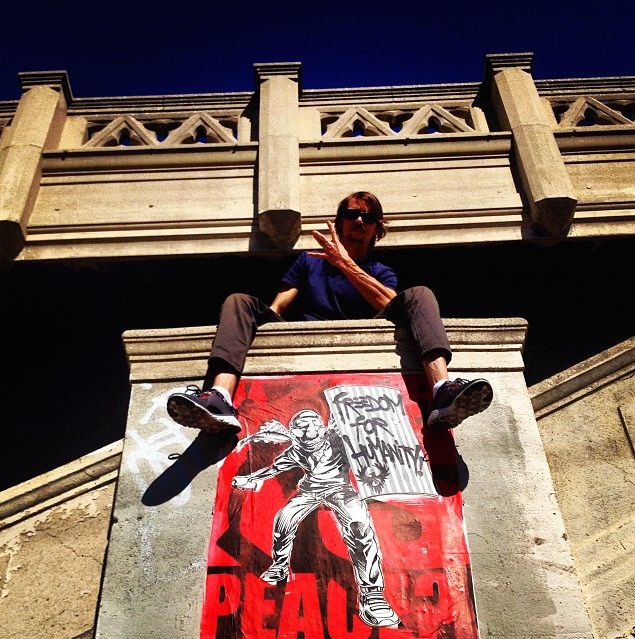
Revolutions produce artifacts—these are not solely weapons or banners, but often quieter objects that convey significant messages before their full impact can be realized. Consider a wheat-pasted broadside affixed to an overpass in Los Angeles, or a hand-lettered cardboard sign displayed in snow outside a Tokyo office building. Take into account a newspaper headline, etched permanently into software that would ultimately challenge the very foundations of global finance.
The works featured in the Relics of a Revolution exhibition at the Bitcoin 2026 Conference in Las Vegas reveal a distinct lineage of dissent, bridging street-level protests to the inception of Bitcoin itself. Mear One (b. 1971, Santa Cruz, CA) has dedicated nearly four decades to utilizing the urban landscape of Los Angeles as a canvas for political and economic critique. As a pioneer of the Melrose graffiti art movement in the late 1980s, he became the first graffiti artist to showcase his work at both the 01 Gallery on Melrose and the 33 1/3 Gallery in Silverlake, where Banksy would later host his debut North American exhibition. In 2004, Mear One toured with Shepard Fairey and Robbie Conal as part of the Be the Revolution initiative, a nationwide series of anti-war street art interventions during the Bush administration. His work has been included in the significant Art in the Streets exhibition at the Los Angeles Museum of Contemporary Art in 2011 and is now part of the permanent collections of various institutions, including the Laguna Art Museum. From anti-Gulf War broadsides in the early 1990s to the Occupy Wall Street movement in 2011, Mear One’s work consistently asserts that the root of societal issues lies not merely in political figures or policies, but in the systemic architecture of money and power.
The author engaged in a discussion with Mear One prior to his panel at Bitcoin 2026, exploring themes of protest, art, broken systems, and the ongoing nature of revolution.
BMAG: Mear One, your journey into graffiti began in Los Angeles during the mid-1980s, a period when graffiti was heavily stigmatized and the notion of it being showcased in museums seemed unlikely. By the early 1990s, you were already creating extensive political pieces addressing economic power structures, such as anti-Gulf War broadsides. What motivated you to adopt the street as a political canvas at that time, and who did you intend to reach?
Mear One: Graffiti serves as the voice of the discontented individual. In those years, it provided a means to engage with the masses during a time when the internet and social media were in their infancy. When one spray paints messages in public spaces, it resonates with urban dwellers caught in traffic, eliciting reactions from city officials whose neglected walls we adorned as a critique of their ineffective policies. Conscious art speaks to attentive audiences, and the act of vandalism unleashes an energy that catalyzed a necessary movement. The streets became our forum, and the anonymity afforded us fostered a permissionless expression.
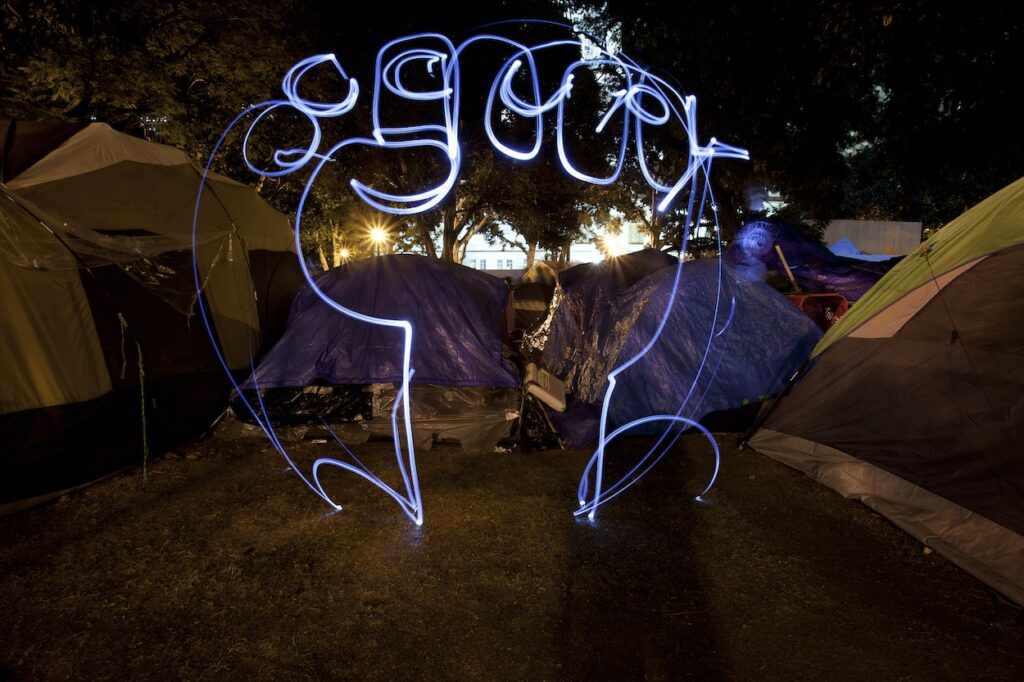
BMAG: In Bitcoin culture, there is a saying: “all wars are banker’s wars.” The Genesis Block itself includes a newspaper headline referencing a bank bailout. Reflecting on your earlier work during the Gulf War and later during Occupy Wall Street, to what extent does that work align with the foundational critiques that Bitcoin encapsulates within its protocol?
Mear One: Upon discovering Bitcoin, I was reminded of the graffiti, hip-hop, and punk rock culture that shaped my upbringing—it mirrored the revolutionary expressions I conveyed through my art. Humanity seeks ideologies or movements that resonate with our frustrations and offer solutions to the entrenched socio-economic order that pervades our lives. It became clear that the architects of our current economic matrix also constructed our oppressive educational institutions and instigated unjust wars for profit. Satoshi understood this. Our conflicts are not fundamentally about ideology; they arise from struggles for economic and political power, often at odds with our innate human desires for freedom, love, and spiritual fulfillment. My artistic mission has always aimed to pursue freedom—liberation from systemic constraints—serving as the foundation for my art, philosophy, and resistance.
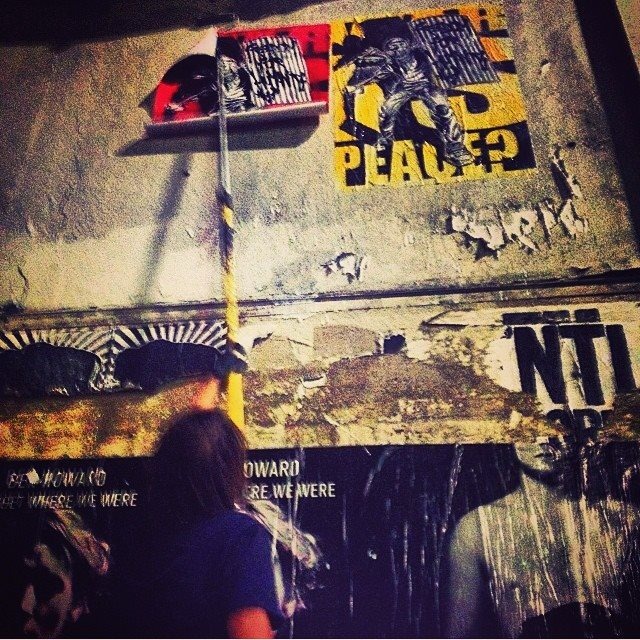
BMAG: In 2004, your involvement with Shepard Fairey and Robbie Conal on the Be the Revolution tour took anti-war and anti-corporate street art nationwide amid an era marked by profound political shifts. What insights did that experience provide regarding the use of art as a medium for political and economic resistance, and how did it shape your perspective as we faced the financial crisis?
Mear One: The Be the Revolution tour was fundamentally an outlet for my frustrations regarding American politics at that time. The ongoing reality of waging wars for foreign resources only exacerbated the existing socioeconomic divide, a matter that weighs heavily on my philosophical conscience.
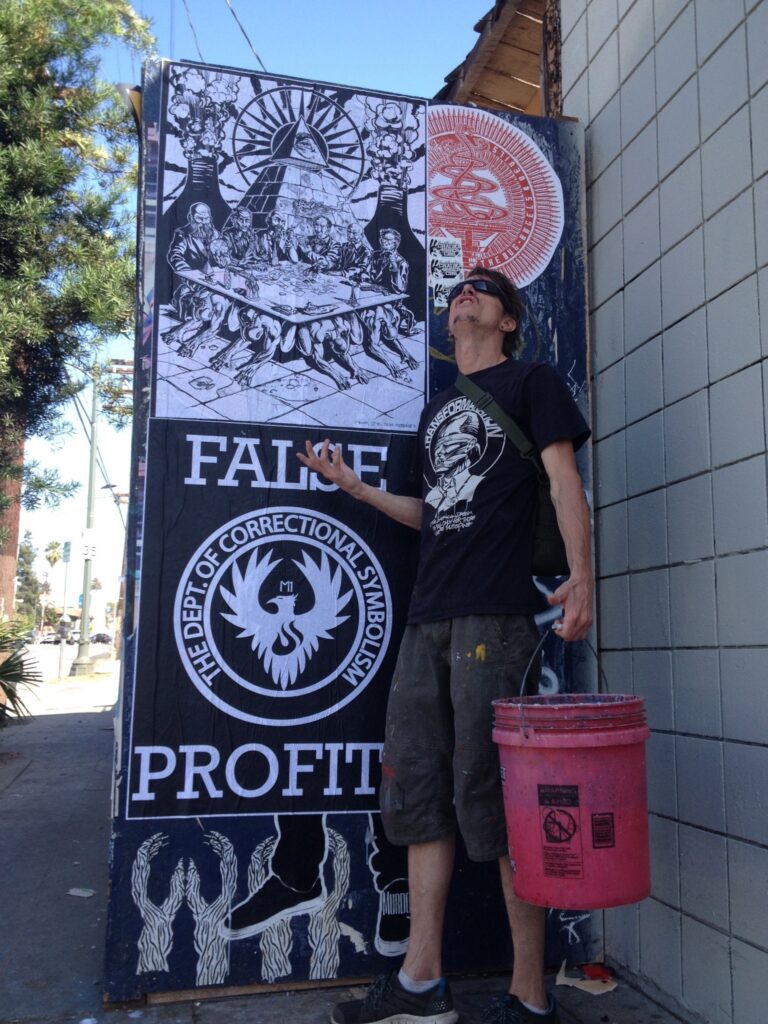
However, the 2008 financial collapse profoundly altered my lens. It sparked a newfound curiosity in understanding the mechanics of money, prompting me to articulate through my art an accurate depiction of the emergent world order, culminating in my most controversial piece to date, False Profits.
“You cannot dismantle the master’s house with the master’s tools.” Subversive art—whether it employs spray paint, a paintbrush, or any other medium—serves as a powerful catalyst for change. Great art possesses an enduring quality, often articulating truths before they resonate widely among the populace, ideally before it is too late.
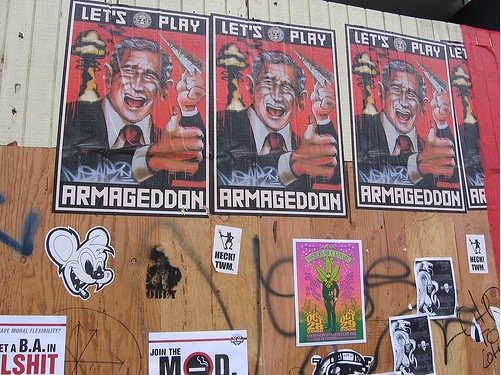
BMAG: Given the ephemeral nature of street art, many of your protest works from the Occupy era have endured. What significance does it hold for you that creations born from urgency—intended to be transient—are now regarded as historical artifacts within a gallery context?
Mear One: Their relevance persists ironically because the conditions they address remain unchanged. The circumstances continue to reflect a cycle within our human narrative, making it essential for Bitcoin proponents to remember past struggles and the solutions we opted for. These Relics of Revolution demand immediate action—the time for change is perpetually upon us!
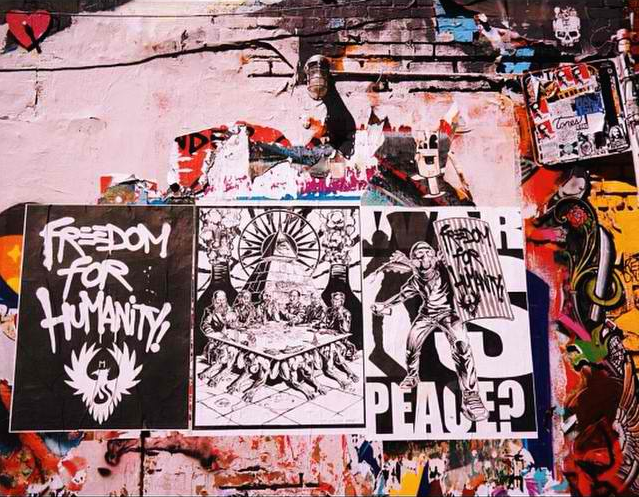
BMAG: You have been creating anti-war street art since the Gulf War. Now, more than thirty years later, we are witnessing renewed military escalations in the Middle East, specifically regarding Iran. While the justifications have changed, the economic drivers remain strikingly similar. For a generation that has observed 9/11 serve as a pretext for two decades of conflict, and witnessed the 2008 collapse expose the flaws within the financial system, do you perceive this repeating cycle as validation of your messages through your art, or does it signify a failure of communication?
Mear One: Indeed, as you noted, all wars are banker’s wars. For centuries, we have perpetuated a misleading narrative about our ‘enemies.’ Through my art, I have consistently sought to expose these truths, which has undeniably complicated my journey. Despite facing criticism, censorship, and threats, I remain resolute in my artistic vision. At times, it feels akin to standing on a street corner, proclaiming truths that others deem insane in the beginning. Yet, there is a growing awareness; it is challenging to create art that critiques the prevailing system, just as it is difficult to confront the often-unremarkable reality that pervades social norms. Yet, witnessing the formation of a movement like Bitcoin and connecting with like-minded individuals dedicated to revolution invigorates this effort.
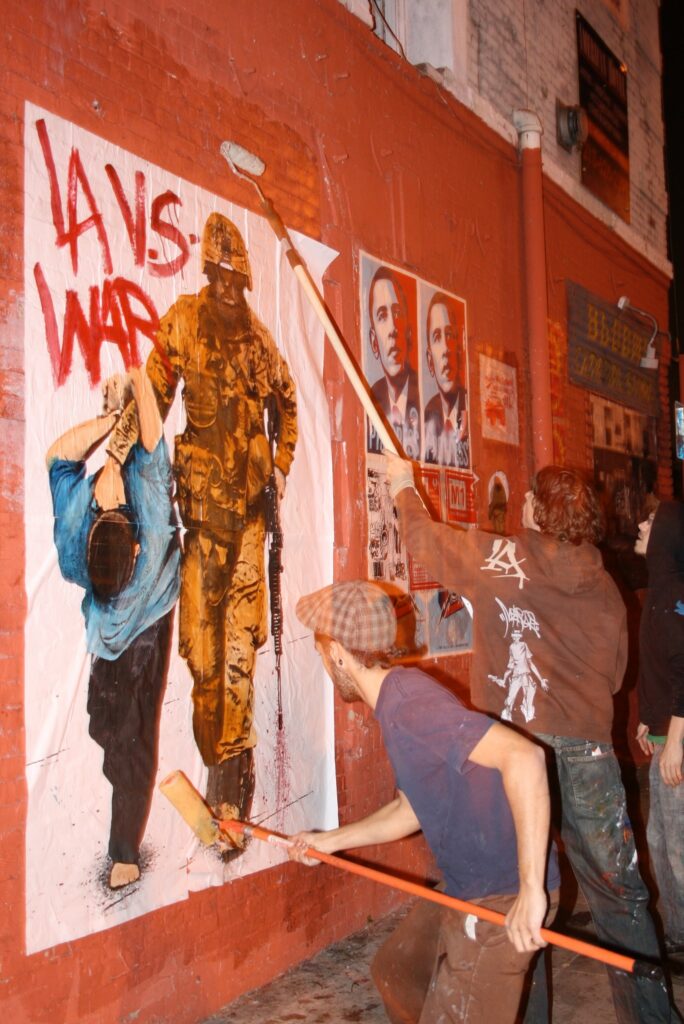
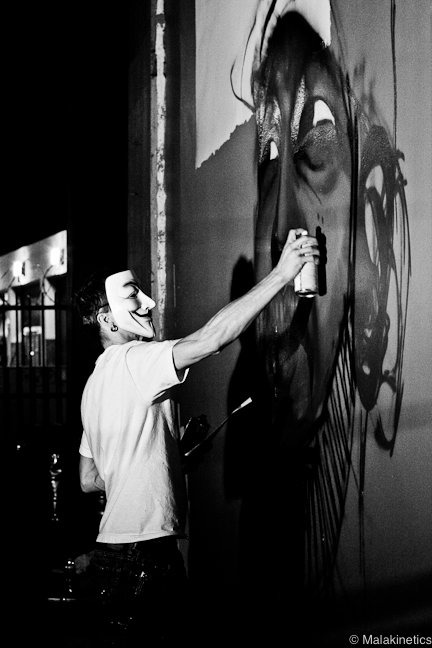
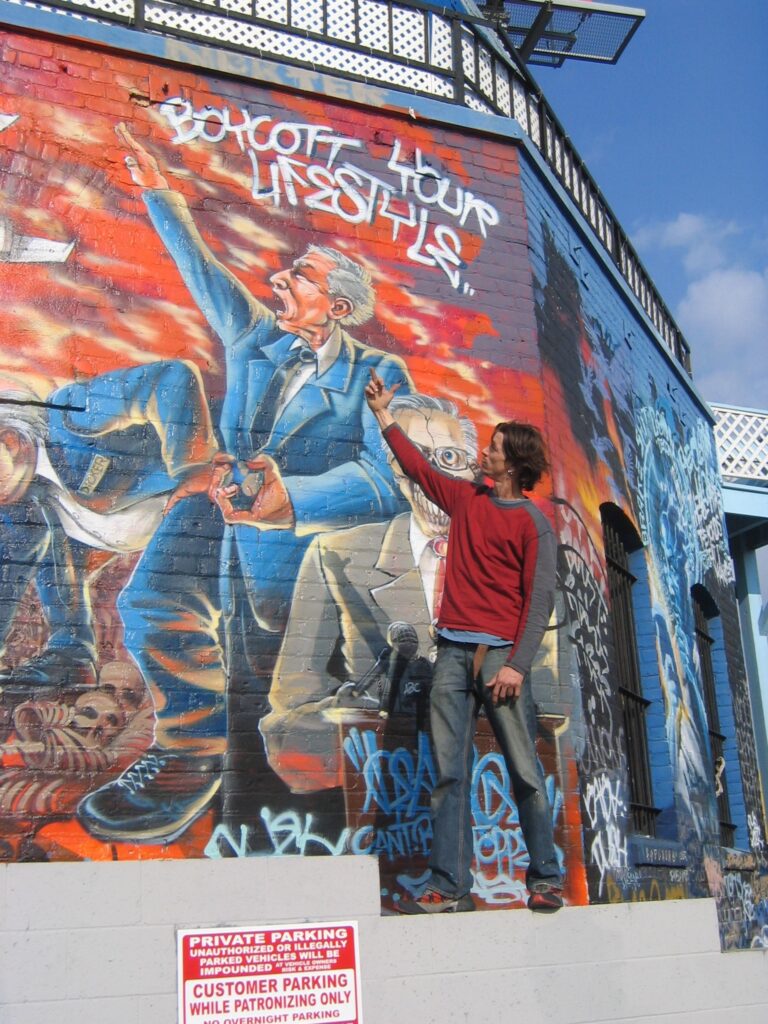
BMAG: A prevalent argument in Bitcoin discourse posits that wars are not primarily fought over ideology or territory but rather for monetary control. Each major conflict ultimately seeks to defend or reset an economic order that benefits the instigators. Your artistic work has visually represented this argument since the 1990s. How would you convey this connection between war and finance to someone who has yet to consider it from this perspective?
Mear One: I craft an allegorical representation that encompasses the primary factors at play, striving to present it in an accessible format. Given the complexity of the subject matter, I incorporate subliminal archetypes and symbolism to facilitate engaging discussions among viewers. Through narrative art, challenging concepts can be introduced in a manner that resonates with audiences and encourages dialogue.
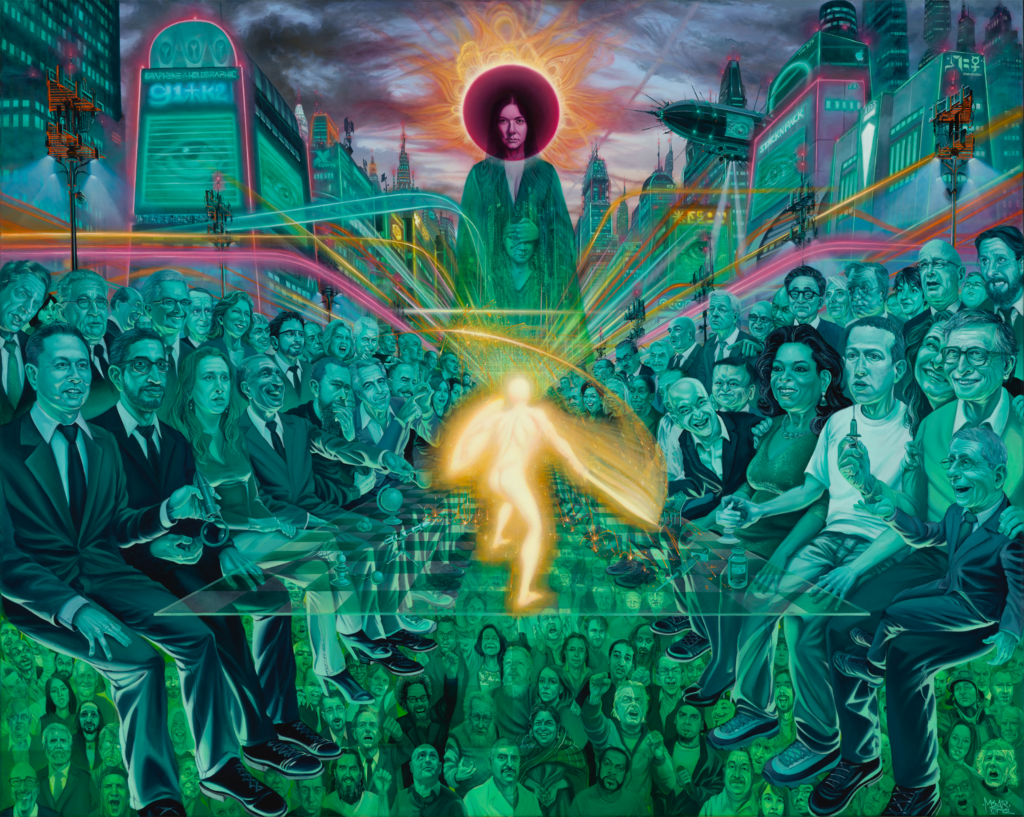
BMAG: In contemplating the 2008 crash, subsequent bailouts, the Occupy movement, and the resurgence of inflation and military expenditure, do you regard Bitcoin as the inaugural means of escaping this cyclical trap, or simply the latest endeavor to forge an alternative outside a system that continually absorbs its opposition?
Mear One: I embrace a non-dogmatic approach to innovation. To me, Bitcoin represents the initial wave of technology that may transition us away from the fiat system. Nevertheless, I maintain reservations regarding its capacity to be the ultimate solution to our current challenges. Observations of Wall Street attempting to co-opt Bitcoin, coupled with infighting among its proponents, often obscures its foundational ethos. While these issues are being resolved, I maintain faith in further innovations to emerge. Ultimately, the existing monetary system must navigate its path, and I aspire for what follows to be a spiritual awakening. I perceive Bitcoin as a vital tool, functioning as an emergency lifeline that may guide us into the 2030s—paving the way towards a state of genuine freedom, where the notion of currency itself may become irrelevant as we strive towards a new future.
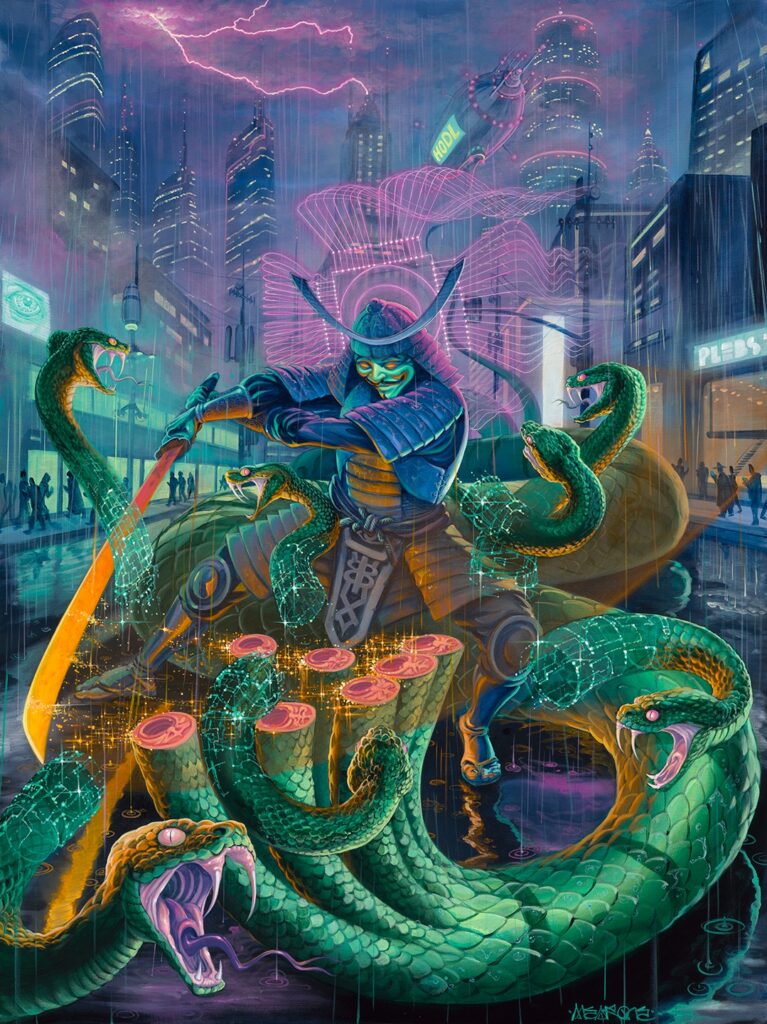
BMAG: How did your initial encounter with Bitcoin occur, and was there a pivotal moment that connected it to the values and frustrations that have driven your artistic practice for decades?
Mear One: In 2009, during a conversation at a local coffee shop, I met a mathematician who introduced me to Bitcoin for the first time. Historically, I had not envisaged myself as one who would invest in currency, thus it remained an intriguing concept at the back of my mind. As I delved deeper into the essence of money through the Occupy movement and my London mural experience in 2012, I found my path leading to my inaugural Bitcoin conference at Anarchapulco, Mexico. There, I encountered a community of anarchists who echoed my political and lifestyle sentiments. Inquisitive and eager, I absorbed their insights. I completed two live art pieces for the community, which were auctioned, and those collectors assisted me in establishing my first wallet (a note of gratitude to EDGE) along with facilitating transactions in exchange for my proof-of-work. It was in that moment that the connection solidified, as I attained my first coins.
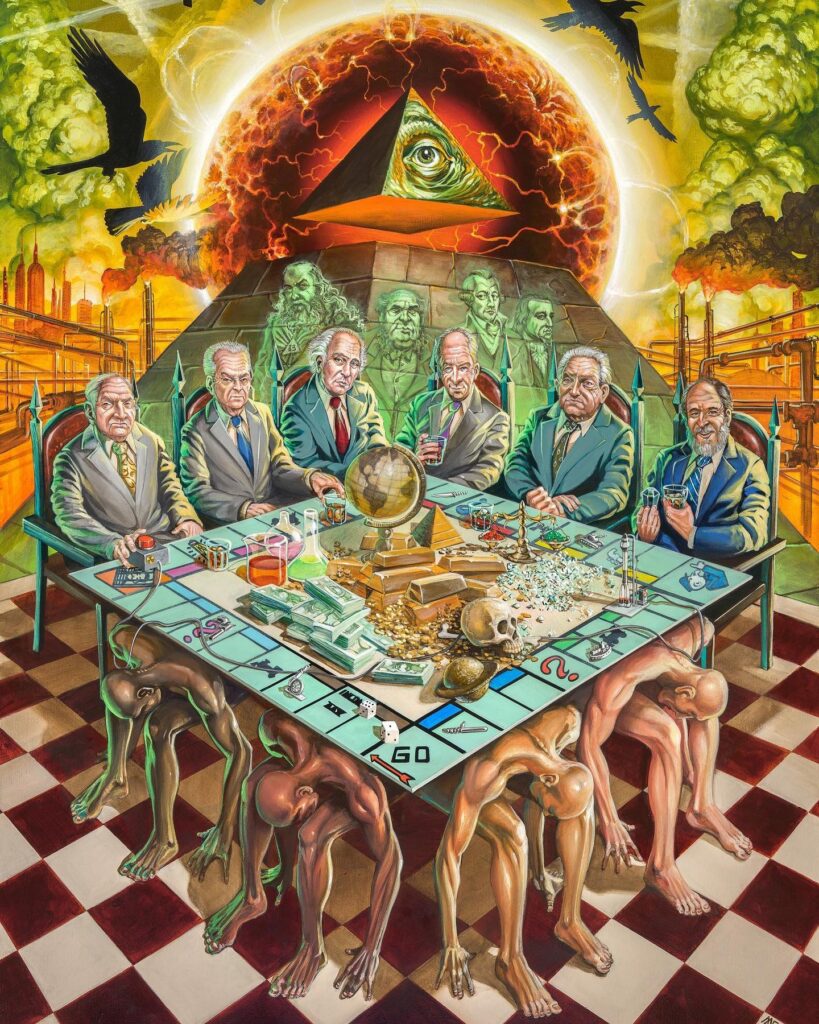
BMAG: This exhibition, titled Relics of a Revolution, encompasses your protest works alongside an original Times newspaper from January 3, 2009—the very publication that inspired Satoshi’s inclusion in the Genesis Block. This newspaper signifies the transition from diagnosis to protocol, crystallizing the frustrations that Mear One articulated on walls and that Kolin later expressed through signs. When observing your work in conjunction with that artifact, what message would you like attendees to derive, particularly those who may recognize Bitcoin as merely a price indicator but lack an understanding of its historical context?
Mear One: Collect these works of art, and I do not state this lightly. Each influential art movement has its patrons—those whose power and influence encapsulate the style and ideologies of an era. The works showcased in this gallery represent art framed within the Bitcoin ethos, reflecting the philosophical principles embodied by Bitcoin’s foundational masterpiece, the Genesis Block. Art, much like Bitcoin, serves as an enduring store of value. The cultural preservation of these artistic expressions of freedom necessitates the support of those passionate about these aesthetic visions. Currently, we confront World War III, economic disarray, and the disintegration of trade and agriculture. Bitcoin disrupts cycles of suffering and oppression. Our most pressing struggle is against the controllers of capital and their obsolete fiat institutions, ultimately rendering their schemes irrelevant.
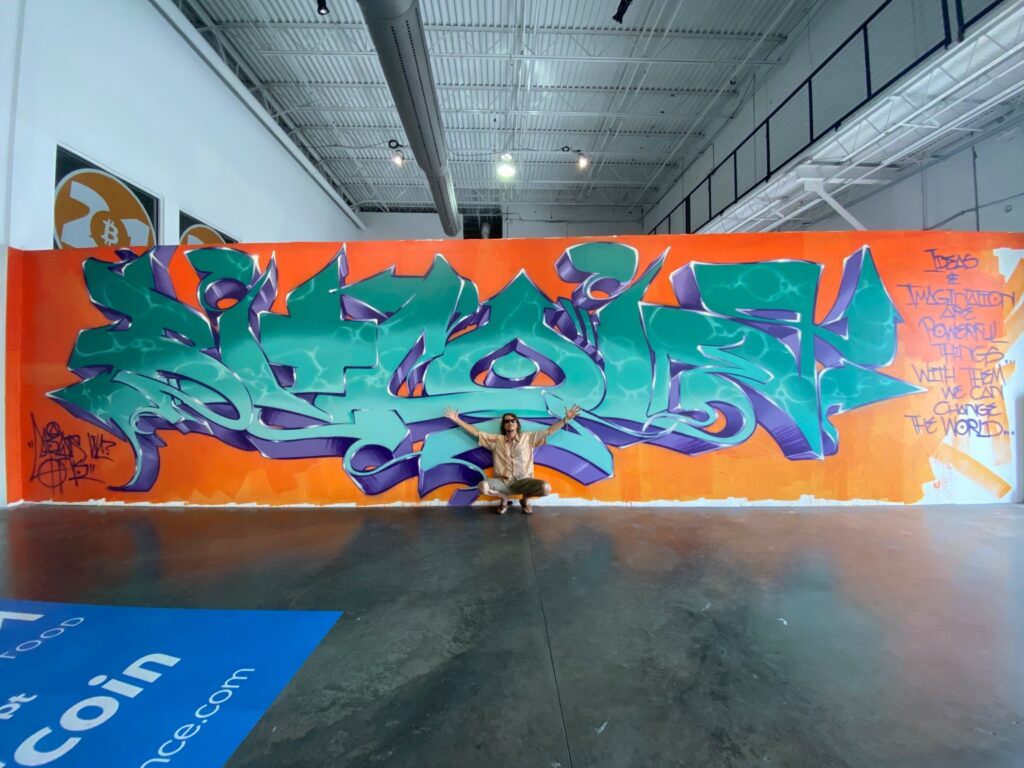
This is Part II of a three-part interview series accompanying the Relics of a Revolution exhibition. Part I features Kolin Burges. Part III, featuring Afroman, is forthcoming.
Addressing the funds is essential for addressing world issues.
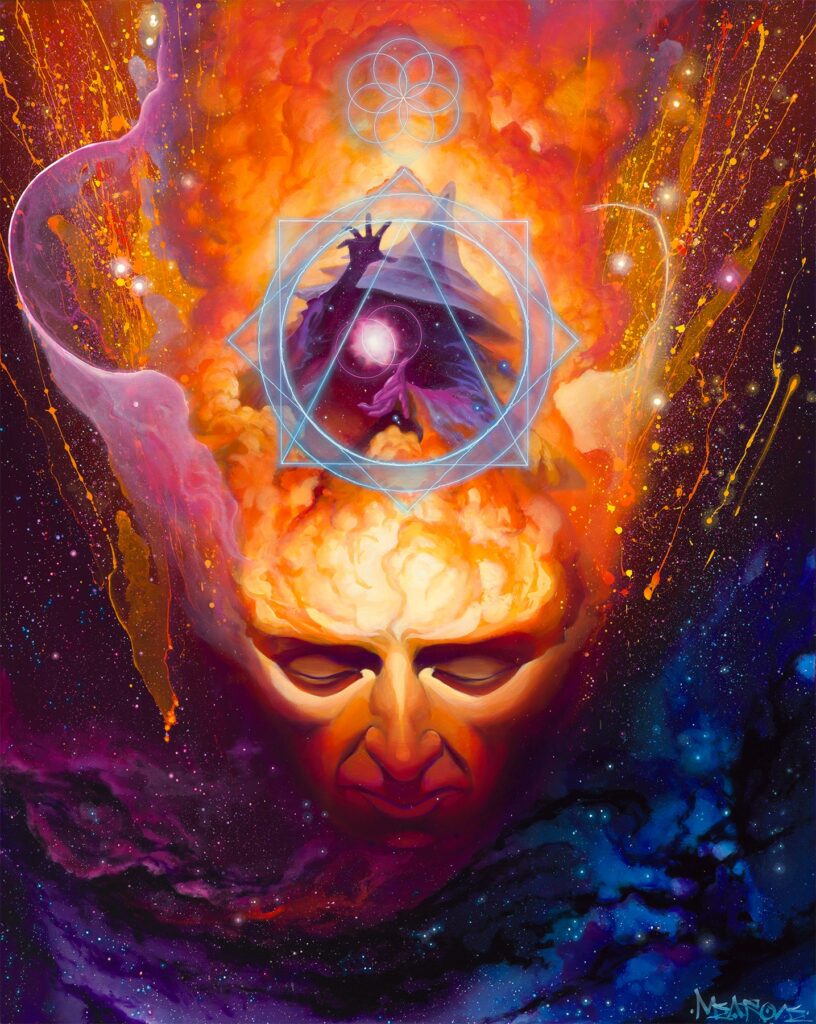
Mear One will be engaging in live painting at the BMAG art gallery throughout Bitcoin 2026, scheduled for April 27–29 at The Venetian Resort, Las Vegas. Additionally, he will participate in a panel moderated by Dennis Koch, titled “Examining Bitcoin Art Through a Protest Lens.” A unique print by Mear One, entitled The Magician, is available exclusively through BMAG. To preview Mear One’s historic protest works included in the Relics of a Revolution exhibition, visit the BMAG B26 auction HERE.
The Bitcoin Museum & Art Gallery (BMAG) oversees curatorial and cultural programming for BTC Inc and the Bitcoin Conference. Since its inception in 2019, the BMAG conference art gallery has facilitated over 120 BTC in art and collectible sales. For further information about BMAG, visit museum.b.tc or follow them on Twitter @BMAG_HQ. Consider bundling your Bitcoin 2026 pass with a stay at The Venetian to receive your fourth night free. Use code AFTERS for a complimentary After Hours Pass, or secure your pass here.

Thank you for visiting our site. You can get the latest Information and Editorials on our site regarding bitcoins.

