


Technological advancements typically encounter inherent limits in their utility and adoption. Once a technology has addressed the problems within its scope, its growth potential becomes constrained. For example, once every consumer interested in cooking possesses a potato peeler, further market expansion becomes minimal. Currently, a pertinent question surrounding artificial intelligence pertains to the extent of problems it can resolve, with market estimation ranging from potential overvaluation to virtually unlimited growth.
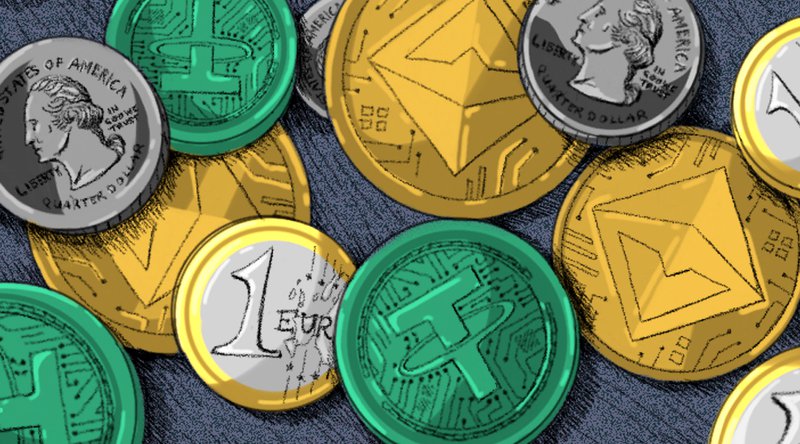
Stablecoins have progressed from negligible beginnings at the dawn of the decade to achieving a market capitalization in the mid-trillions and monthly transaction volumes exceeding $1 trillion. Citigroup forecasts that the overall stablecoin market cap may reach approximately $2 trillion by the decade’s conclusion.
In consideration of trillions, stablecoins may bear a resemblance to artificial intelligence rather than kitchen utensils.
However, do stablecoins face a natural limitation? Is their functionality restricted to a specific set of problems? If so, where does this limitation exist? What factors may impede their growth?
To address these inquiries, it is essential to reflect on the reasons behind the successful rise of stablecoins, the factors that could inhibit their future expansion, and the implications for their overall utility—namely, the spectrum of challenges they can address.
Factors Contributing to the Popularity of Stablecoins
Three primary reasons underpin the current appeal of stablecoins.
Price Stability and Low Volatility
The foremost factor is price stability. While numerous cryptocurrencies exhibit volatility—which may enhance their speculative appeal—they often prove inconvenient for everyday transactions. By definition, stablecoins possess a stable value, rendering them a reliable medium of exchange. Price stability serves as their core value proposition.
Furthermore, price stability can confer an advantage over other cryptocurrencies expected to appreciate continually. An individual may hesitate to spend assets anticipated to double in value, whereas stablecoins, projected to retain value or depreciate slightly, compel users to utilize them before their purchasing power diminishes.
Increased Portability
The second reason involves portability. The process of exchanging fiat currency for cryptocurrency can be cumbersome; however, transitioning from one cryptocurrency to another is typically more straightforward. Consequently, many users prefer converting fiat into stablecoins in bulk, facilitating seamless value transfers between various digital currencies. Tether (USDT) stands out as the most extensively traded asset due to its efficiency in facilitating trades.
In numerous markets, these two factors often reinforce each other. In countries where national currencies experience rapid depreciation relative to their stablecoin counterparts, stablecoins offer a means of wealth preservation. Additionally, as some nations impose currency controls to restrict capital flight, their citizens frequently resort to stablecoins to bypass such artificial constraints.
Tax Optimization
Finally, the issue of taxation comes into play. Many jurisdictions—including the United States, Canada, the United Kingdom, Japan, and Australia—classify cryptocurrencies as commodities, subjecting them to capital gains taxes. Consequently, every transaction may trigger a taxable event. However, numerous users and businesses may seek the utility of cryptocurrencies for their portability, similar to payment systems. Thus, stablecoins’ price stability allows for transactions without incurring immediate tax liabilities.
The Necessity of State Rules in Monetizing Currency
Fiat currency represents a cornerstone of modern state power. Beyond its symbolic significance, the authority to control the money supply presents a substantial advantage. For perspective, one might consider a film like Ridley Scott’s *Black Rain*, which illustrates the importance of such control.
If stablecoins are facilitating the minting of hundreds of billions in fiat equivalents and moving trillions in value monthly, regulatory scrutiny from the state is inevitable. It is unrealistic to expect a private entity to operate a mint of that magnitude without facing government oversight.
Historical precedent indicates that states will seek to regulate any activity they can, as unregulated activities jeopardize their authority. States primarily produce regulations to facilitate resource acquisition. In essence, to ensure their share from any economic activity, governance must typically quantify and control that realm. This notion led respected historical sociologist Charles Tilly to characterize states as “protection rackets” and “organized crime.”
The centralization of financial operations underlies why states historically favored tariffs over income taxes. In earlier times, when bureaucracies were limited and populations dispersed, accurate taxation of income proved challenging due to the lack of data and resources. Hence, states preferred tariffs, which were easier to manage given the fewer points of collection.
The underlying principle is that the more centralized an activity, the simpler it becomes to regulate and monitor. In summary, centralization invites regulation; therefore, the more essential an operation is to state authority, the higher the incentive to exert control. The issuance of currency epitomizes such centrality.
Stablecoins mirror this phenomenon. Their dependence on centralized value sources and operational structures has prompted regulators to introduce new regulations. While some of this oversight might be prudent, it undeniably limits the scope of stablecoin utility.
Regulations, Their Impacts, and Future Predictions
The surge in regulatory oversight has been pronounced, likely reflecting a burgeoning need for frameworks. Leading stablecoin issuers, such as Tether and Circle, are actively engaging with regulators but adopting divergent strategies. These entities recognize their roles as private fiat mints and custodians of substantial deposits, akin to banking institutions. Consequentially, mature stablecoin issuers appear to be welcoming regulatory reform.
Regulators contend that stablecoin regulations safeguard users and provide issuers with clearer operational environments. This perspective aligns with the Securities and Exchange Commission’s (SEC) views.
This rationale holds validity. Entities managing significant liabilities should exhibit the capacity to meet those obligations, warranting some level of oversight. Nonetheless, the introduction of existing regulations has imposed considerable restrictions regarding the operational capacities of stablecoins.
To illustrate, the European Union has enacted the Markets in Crypto-Assets Regulation (MiCA), which became law in 2023. However, its significant repercussions have not become apparent until Q1 2025. MiCA mandates that stablecoin issuers secure electronic money licenses in at least one EU member state, prompting major exchanges like Binance and Coinbase to delist several leading stablecoins, including USDT. Notably, a consortium of large European banks is endeavoring to introduce their own euro-pegged stablecoin.
MiCA’s implementation can be likened to a regulatory bombshell, effectively banning prominent stablecoins while advocating for state-sanctioned alternatives.
Conversely, the United States has implemented the Guiding and Establishing National Innovation for U.S. Stablecoins (GENIUS) Act, which is comparatively accommodating. Under GENIUS, the Treasury Department may acknowledge foreign stablecoin issuers as sufficiently regulated entities in their home countries, alleviating the necessity for a domestic U.S. presence. It also stipulates certain requirements, such as reserve guarantees and public disclosures.
While the GENIUS Act imposes certain obligations on issuers to bolster consumer protection, it also subjects them to the stringent requirements of the Bank Secrecy Act, which aims to curtail money laundering. As experienced by many who have purchased cryptocurrency through exchanges, Anti-Money Laundering (AML) and Know Your Customer (KYC) regulations generate significant friction, constraining how holders may utilize stablecoins. The ease of transactions was a primary factor behind the initial attraction to stablecoins. Although enhanced consumer protections may ultimately bolster their utility in the aggregate, users desiring immediate access to USDT may disagree.
Moreover, while the EU and the U.S. may represent pivotal stablecoin markets, many other jurisdictions also possess existing regulations (e.g., Japan, Canada, Chile) or are anticipating upcoming legislation (e.g., the UK, China, Australia, Brazil, Turkey).
Envision a vast Venn diagram encompassing all these regulatory frameworks; the utility of stablecoins resides within the areas of overlap that remain economically viable. How expansive is this intersection? Given that stablecoins are pegged to national currencies, which governments safeguard diligently, one must consider whether these disparate regulatory regimes are likely to converge or diverge in the future.
The more intricate the regulatory landscape, the smaller and more isolated the opportunities for stablecoins to thrive. Although they will maintain a niche, certain niches may be exceedingly limited. It is improbable that any stablecoin, anchored to a national or regional fiat currency, will fulfill the requirements of all regulators across markets necessary for it to emerge as a global currency. This reasoning likely accounts for the geographical constraints observed in the actual usage of stablecoins, which undermines the initial expectations for “global digital dollars.” Even USDT, the most utilized stablecoin, operates effectively only within a limited number of permissive jurisdictions, while USDC, with a comparable product offering, faces similar structural limitations.
Sufficient Within Their Own Bounds, but Bitcoin Offers Greater Potential
Stablecoins, being centralized fiat-backed tokens, are susceptible to rigorous regulatory scrutiny, resulting in increased costs and friction for all stakeholders involved. This trend is already evident and is poised to continue. Does this imply an inevitable decline for stablecoins?
Unlikely. As tokenized fiat entities, stablecoins are poised to succeed wherever fiat currencies retain their efficacy. In practice, this translates to conventional payment systems. Payments can be conceptualized as instructions to settle a debt; thus, in scenarios characterized by intermediated exchanges, stablecoins will likely serve as the transactional medium. The motivation to capture market share in the payment sector could explain why established financial technology firms like Klarna, PayPal, and Stripe are launching or integrating their own stablecoin offerings.
However, despite the evolution of stablecoins into conventional payment mechanisms, they may remain confined to typical payment frameworks, subject to state regulation and enduring functional and geographic limitations. This new classification entails potentially substantial fees for intermediaries and added friction for users.
Nevertheless, a vast landscape of value exists beyond this payment-centric model, either due to requirements for direct, disintermediated transactions, a disregard for national boundaries, lack of associated debt, or a combination of these factors. The challenge in recognizing this broad spectrum of value transfer stems from the overwhelming dominance of the balkanized, intermediated payment paradigm, especially as advancements in technology have only recently begun to unveil alternative methods.
Consider the act of providing a tip to a busker; such a transaction merely involves transferring value rather than settling a debt. Similarly, cash transfers between individuals represent disintermediated exchanges. Now envision extending this scenario to a digital platform, where a content creator located on another continent receives support through an app. Understanding the entire scope of value transfer necessitates incorporating directness and borderless functionality within our digital context.
Therefore, value transfer requires minimal friction, both technically and regulatory-wise. To realize this aim, a currency liberated from national fiat currencies and fundamentally decentralized is essential. This is where Bitcoin becomes significant. Bitcoin operates as an open, decentralized, and neutral monetary network, suitable for users worldwide, regardless of time or location. As stablecoins grapple with navigating the regulatory landscape, Bitcoin thrives in its ability to transcend such limitations.
Constructed for the internet, Bitcoin is inherently programmable in ways that stablecoins can only approximate. Furthermore, Bitcoin transactions occur directly between users, negating the necessity for third-party custodians. The future that stablecoin advocates envision is already a reality within the Bitcoin framework.
Success is Eased Without Regulatory Hurdles
Utility plays a pivotal role in economics, serving as the foundational principle of decision-making. Individuals gravitate towards the options that offer the most utility, which is evident in the choices they make.
The usage of stablecoins is a testament to their utility. While this utility is unlikely to diminish, regulatory constraints will inevitably curtail it. The growth trajectory of stablecoins will plateau when their utility is counterbalanced by the friction created by regulatory measures. Current and anticipated regulatory environments suggest an impending equilibrium may soon be reached.
In contrast, Bitcoin, due to its decentralized nature and independence from state-backed fiat, faces far less regulatory oversight, making it inherently more resilient to such constraints. Moreover, its digital-native design positions Bitcoin uniquely for a global environment in which commerce and value transfer occur seamlessly and without borders. Given that regulation poses a limit to the utility of stablecoins while Bitcoin encounters markedly less regulatory friction, it is evident which asset is better positioned to excel in terms of utility.

Thank you for visiting our site. You can get the latest Information and Editorials on our site regarding bitcoins.

