


It is imperative for fund managers engaged in Bitcoin investments to consider the potential ramifications of quantum computing.
The succinct answer is affirmative; however, there remains ample time for preparation, and viable solutions are emerging.
One such solution is the implementation of post-quantum Bitcoin transactions on the mainnet. The inaugural occurrence of this kind took place earlier this week, facilitated by the Starknet Foundation.
JUST IN: The first post-quantum resistant Bitcoin transaction was mined today.
"It required no soft forks. It required no hard forks. It required no core protocol upgrades. And it's live today." pic.twitter.com/YyZbHhm8HI
— Bitcoin Magazine (@BitcoinMagazine) August 27, 2026
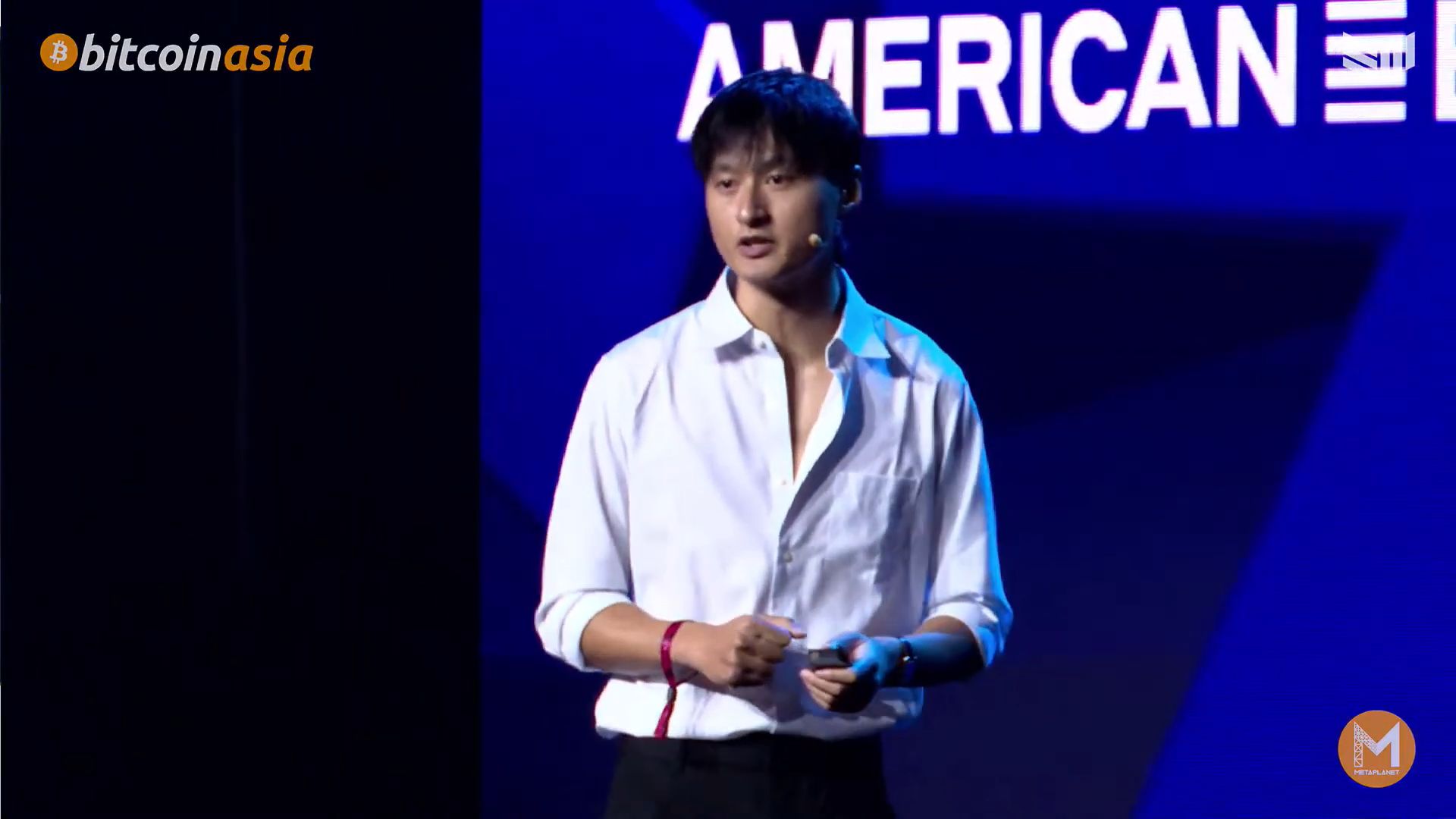
During his presentation at Bitcoin Asia held in Hong Kong on Thursday, Damian Chen, Vice President of Growth at the Starknet Foundation, illustrated how funds susceptible to prospective quantum attacks can be safeguarded without necessitating a network-wide fork through the company’s latest innovation.
Chen remarked, “This is a monumental moment. This is the first post-quantum-resistant Bitcoin transaction on the Bitcoin mainnet today. It required no soft forks; it required no hard forks; it required no core protocol upgrades, and it’s live today.”
This groundbreaking transaction utilized a method developed by StarkWare researcher Avihu Levy. The process operates as follows: Bitcoin transactions momentarily reside in a public queue before confirmation. During this interval, they expose cryptographic data that a sufficiently advanced quantum computer could potentially exploit to forge a signature and abscond with the funds prior to transaction confirmation.
Instead of accepting the first valid signature, Levy’s method generates millions of signature candidates until it procures one with a specific structural characteristic that does not disclose the vulnerable cryptographic material while the transaction awaits confirmation in the mempool.
This technique, referred to as “signature grinding,” is intentionally computationally intensive—resulting in a single transaction taking hours to generate. However, this cost contributes to its resilience against quantum shortcuts.
While promoting Quantum Safe Bitcoin transactions, termed “QSB,” to institutions, Chen asserted that even if attackers possess a fund’s private keys, they would still be unable to execute a fraudulent transfer. He elaborated, “QSB introduces a new hash authorization, and thus an attacker with a sufficiently capable computer, even if they have your exposed public key, even if they derive your private key from your public key, even if they attempt to use that to authorize a spend to transfer your coins out of your wallet, those factors are insufficient for them to achieve that.”
It is noteworthy that conventional Bitcoin nodes currently do not recognize this non-standard transaction format, preventing it from entering the public mempool; instead, it had to be directly submitted to a miner willing to accept it, with mining company MARA’s Slipstream service being the entity that mined the QSB transaction.
Quantum researchers have cautioned that a time will arrive when the software underlying Bitcoin—recognized as the largest and most robust computer network globally—must undergo upgrades to confront the challenges posed by quantum computing.
While certain cryptocurrency venture capital firms have advocated for swift action, leading Bitcoin developers have contended that present-day quantum computers exhibit limited capabilities, having only performed trivial computations thus far.
Nonetheless, these experts have acknowledged the potential for unexpected developments—much like advances within the realm of artificial intelligence—and have commenced the development of potential solutions.
Chen concluded: “The question to me has never been when quantum computing will arrive. We all recognize that quantum will eventually become a reality, but my inquiry has consistently been how long it will take for you to be prepared when quantum does arrive.”

Thank you for visiting our site. You can get the latest Information and Editorials on our site regarding bitcoins.

