


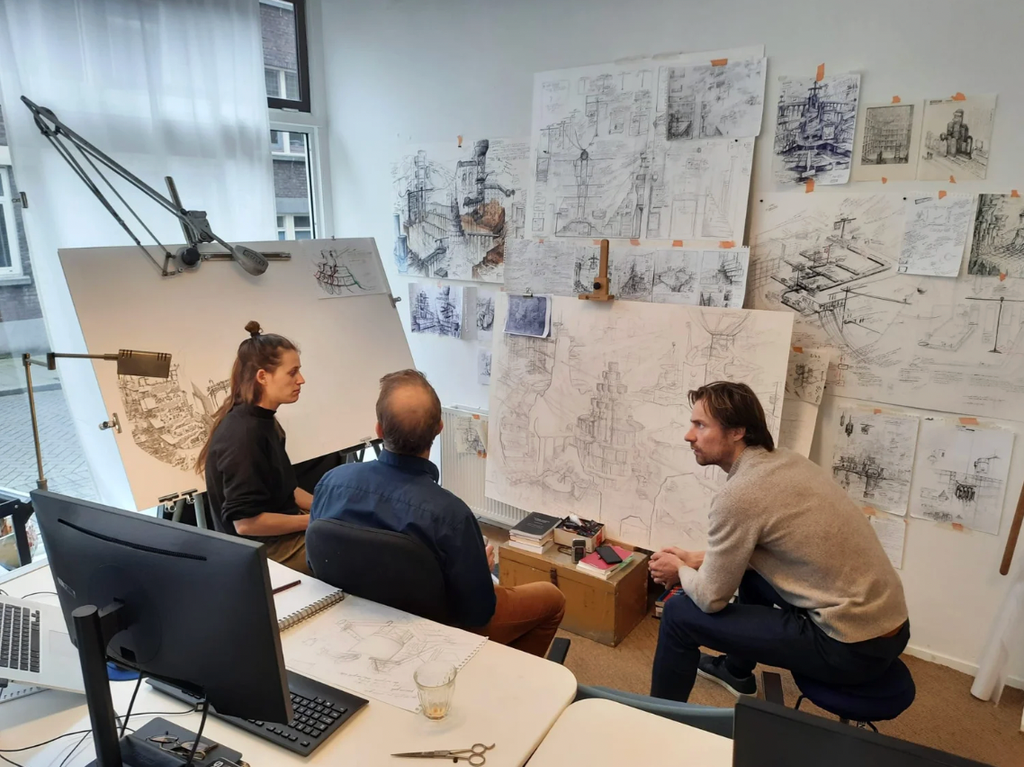
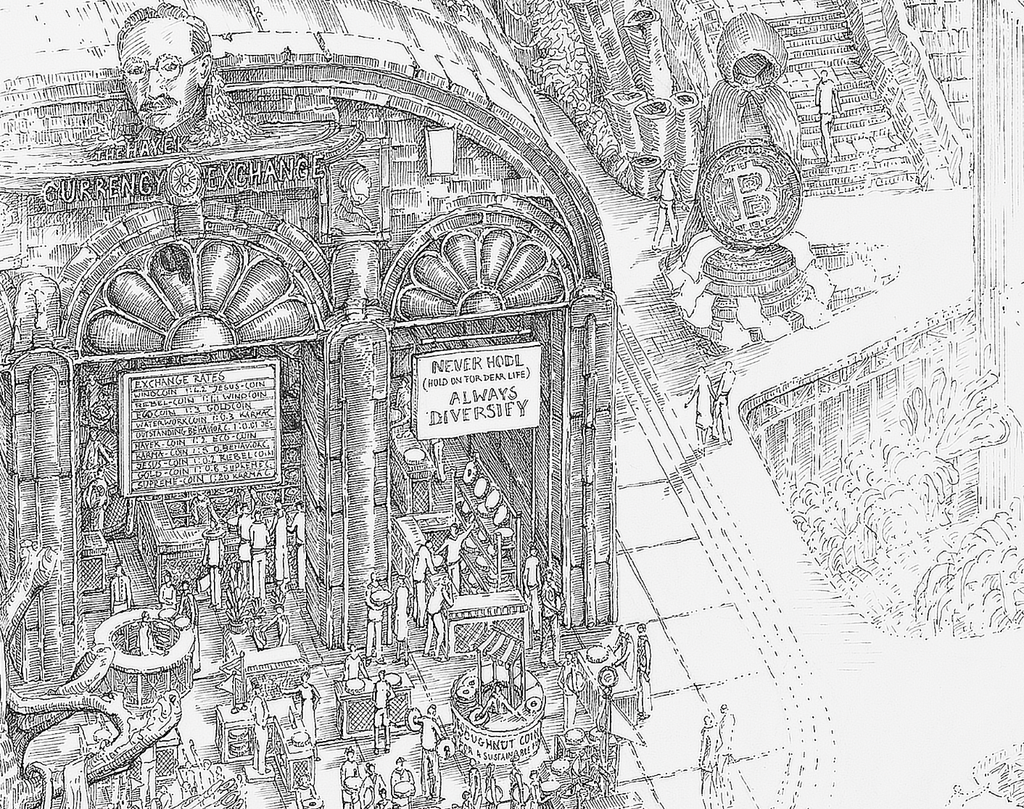
In the contemporary landscape, money plays a pivotal role in determining living conditions, affordability, and the intergenerational accumulation of wealth. However, the mechanisms governing its creation and distribution remain largely obscured, even as their wider implications become increasingly apparent. This paradox inspired Dutch artist Carlijn Kingma, investigative financial journalist Thomas Bollen, and monetary researcher Martijn Jeroen van der Linden to undertake The Waterworks of Money, a project that maps the hidden architecture of the financial system through illustrative drawings and animations. The initiative aims to render these complex systems comprehensible to the public without oversimplifying their intricacies.
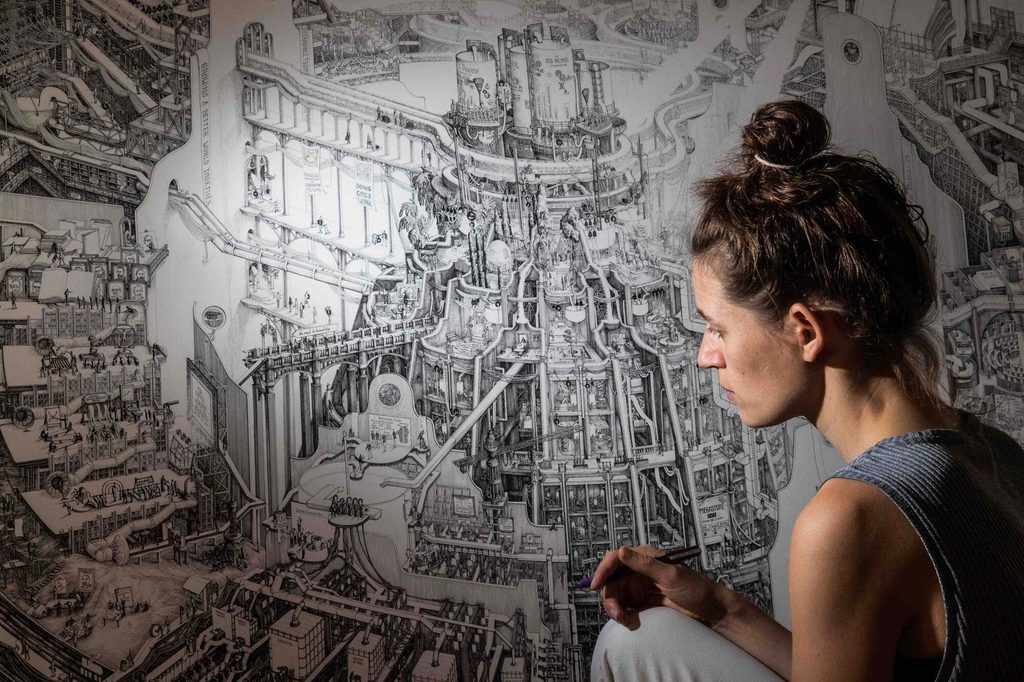
The Waterworks of Money portrays the financial system as an extensive network, featuring reservoirs, channels, and pumps, elucidating the movement of money among banks, governments, businesses, and households. Certain sectors receive ample liquidity, while others remain persistently deprived. This visual representation serves triple functions as an artwork, an educational tool, and a critique of financial power dynamics.
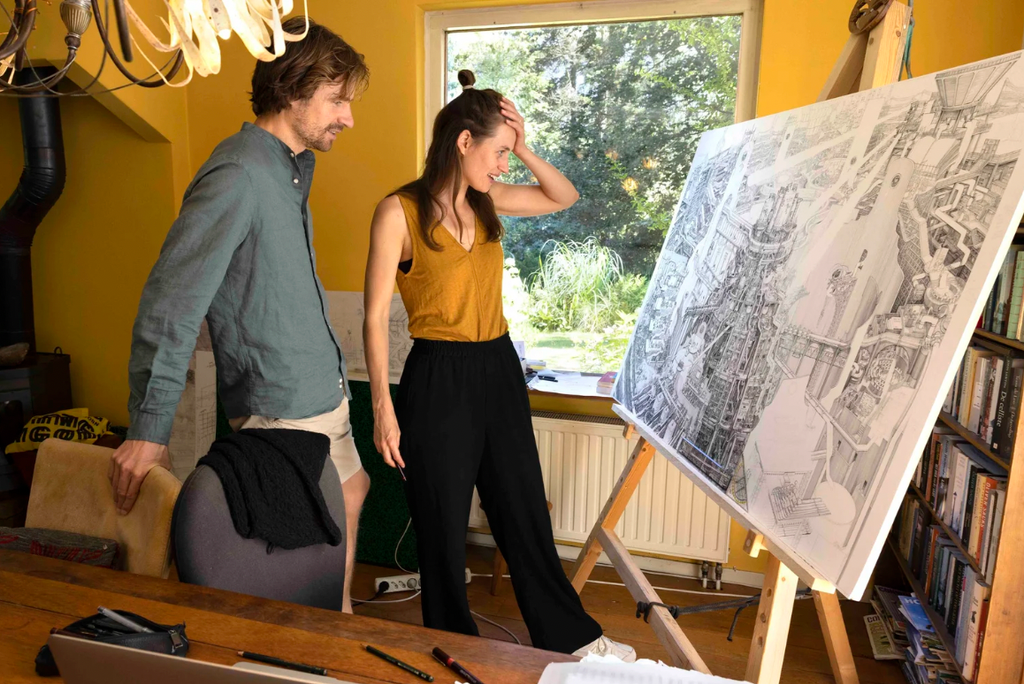
The project originated from two years of extensive research, which included interviews with over 100 experts from various fields, including banking, government, academia, and monetary reform movements. Kingma dedicated more than 2,200 hours to translating this research into an elaborate architectural landscape. Bollen, specializing in investigative journalism focused on financial systems, and van der Linden, whose academic inquiries delve into money and monetary reform, contributed significantly to shaping the economic research and narratives underpinning the project.
Among the scenarios explored is a monetary future influenced by Bitcoin. As Bitcoin permeates traditional finance, it poses the potential to either challenge existing financial power structures or integrate into them—a phenomenon that the project’s collaborators have observed unfolding in real time.
In anticipation of Bitcoin Amsterdam on November 5–6, where Bollen will participate in two panel discussions, the collaborators convened to discuss themes of visibility in money, the relationship between monetary systems and inequality, and Bitcoin’s role in Europe’s financial future.
BMAG: The Waterworks of Money illustrates the financial system as a network of reservoirs, pumps, and channels, where liquidity is unevenly distributed across society. After two years of research and consultations with financial experts, what surprised you most about the actual operation of money? Additionally, what fundamental misconceptions do you believe the public holds regarding this topic?
Thomas Bollen: The most striking revelation was that many individuals entrenched within the financial system possess in-depth knowledge solely pertaining to their specific domains, such as interest rate derivatives, asset management, or mortgage lending. Yet, few have a comprehensive understanding of the larger systemic context in which they operate.
Moreover, it is evidently misunderstood that banks create new money through the act of lending; they do not merely serve as intermediaries transferring depositor savings.
However, it is essential to recognize that this lack of understanding is not solely the fault of the public. Throughout the research phase, engagements with numerous bankers, including the CEO of a major bank, revealed ignorance regarding the nature of their roles within money-creating institutions.
To foster greater understanding, educational initiatives should begin within schools and universities. Current textbooks often perpetuate inaccuracies, and economic education tends to overlook crucial aspects. Notably, even the Riksbank Prize in Economic Sciences awarded in 2022 acknowledged research framing banks as mere intermediaries.
BMAG: A central tenet of The Waterworks of Money is that money does not flow uniformly across society. With housing affordability emerging as a critical issue in Europe and the United States, while asset prices and financial wealth increasingly outpace wages, to what extent can this inequality be attributed to the design of our monetary system as opposed to broader economic forces?
Thomas Bollen: Quantifying this impact precisely is challenging, as numerous factors contribute to the phenomenon. Nevertheless, it is evident that the monetary system has significantly exacerbated inequality, particularly during periods of exceptionally low credit availability.
As Ray Dalio, founder of Bridgewater Associates, aptly summarized in 2019, “Money is free for those who are creditworthy.” Conversely, those without monetary resources or creditworthiness find access unattainable.
The provision of low-cost credit to affluent individuals and large corporations—often utilized for share buybacks and mergers—has inflated both stock prices and real estate values. Consequently, wealthy households and major multinational corporations, which hold these assets, have reaped disproportionate benefits compared to those lacking such holdings or smaller enterprises unable to access similar levels of inexpensive credit.
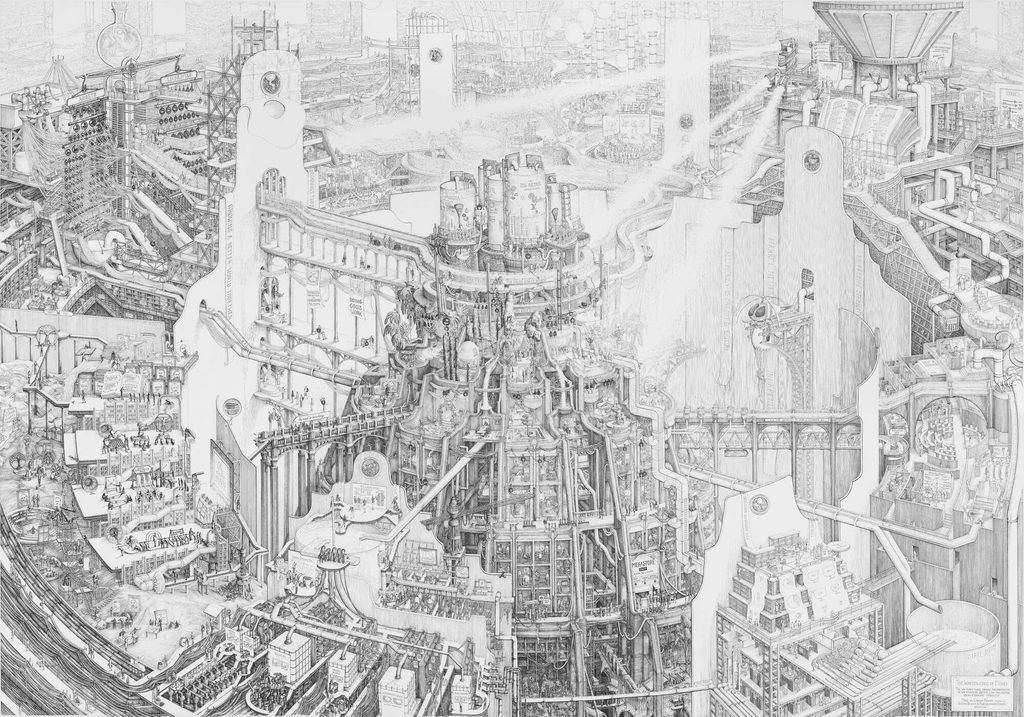
BMAG: The Waterworks of Money is replete with elements designed to elucidate the operational mechanics of the financial system. What aspects of the monetary framework proved most challenging to illustrate? Did any insights gained during your research alter your artistic approach?
Carlijn Kingma: The most significant challenge lay in depicting the interconnectedness of all components. How does one convey clarity in such complexity?
Using water as a metaphor for money is intuitive and effective, facilitating the illustration of liquidity, cash flows, and the concept of money “drying up,” all of which are embedded in financial vernacular. This metaphor also aids in linking different facets of the system, enabling the depiction of pipelines and canals that connect them.
However, certain areas necessitate an intricate representation to capture accuracy completely. Money exists in various forms—commodity money, public money, private credit money, and additional categories such as short-term debt and repurchase agreements that also serve as money or near-money. It is impractical to depict such a wide array of monetary types flowing through the same system.
BMAG: The Waterworks of Money has engaged both artistic audiences and individuals with an interest in economic matters, including its exhibition at Bitcoin Amsterdam last year. Have you observed differences in how these audiences respond? Has their feedback influenced your perspective on the role of art in elucidating complex concepts?
Carlijn Kingma: Audience responses vary based on their existing knowledge base. Those with greater financial literacy often engage more humorously, recognizing subtle references and jokes embedded within the work. For example, we playfully renamed Basel III to “Babel III,” due to the complexity of the regulations established following the crisis, which could amount to nearly three bibles’ worth of stipulations.
In our scenario envisioning a bitcoin-centric future, titled The Republic of a Thousand Coins, we included numerous humorous elements featuring central bankers, such as depictions of Alan Greenspan as an inflatable doll. These nuances resonate particularly well with the Bitcoin community, which tends to possess a deeper understanding of monetary history than the general populace.
Ultimately, we have observed that art acts as a catalyst for dialogue. The drawing provides a visual foundation from which discussions can emerge, offering a metaphorical lens through which the social outcomes of monetary flows become visible, regardless of one’s existing knowledge.
BMAG: Your research has delved into how financial crises can reinforce the power of institutions deemed “too important to fail.” More recently, your analysis has highlighted the growing influence of asset management firms such as BlackRock and Vanguard. Are we witnessing a genuine transformation in the operation of financial power, or have underlying issues merely assumed new forms since the 2008 crisis?
Martijn Jeroen van der Linden: Post-2008 crisis, there was widespread agreement among mainstream policymakers, think tanks, and economists that the banking sector required substantial reform. The influential de Larosière Group in Europe identified the crisis’s causes as excessive leverage, opaque securitization, shadow banking risks, and fragmented supervision, advocating for urgent systemic repair. However, the fundamental architecture remained unaltered, leading to a lack of substantial change.
The inherent fragility persisted. For instance, in 2023, when Silicon Valley Bank and Credit Suisse faced crises, established crisis protocols developed post-2008 remained unused. In the United States, authorities guaranteed all deposits at SVB, including those exceeding insured limits, while the Swiss government supported Credit Suisse’s rescue by UBS.
Proponents of banking reforms assert that the system has been rendered safer. Yet, the fundamental fragility—rooted in financing long-term loans through runnable deposits—remains. Regulation alone cannot avert bank runs; this fragility remains unaddressed. The banking system’s survival hinges upon significant public safety nets and privileges that continue to be afforded to banks.
While influential non-bank entities have emerged, their roles in money and payments do not possess the same relevance as those of banks, which remains a critical distinction.
BMAG: Originally, Bitcoin emerged as an endeavor to develop a currency independent of government and banking oversight. Currently, however, it is increasingly held through investment funds and traditional financial institutions, including some of the powerful asset managers you have scrutinized in your recent analysis. Does this integration enhance Bitcoin’s potential to transform the financial system, or does it risk replicating the concentration of power it sought to confront?
Martijn Jeroen van der Linden: Bitcoin, as a financial asset, has indeed gained traction among traditional financial institutions. However, its increasing characterization as an investment has compromised its initial promise of serving as an alternative payment system.
Concurrently, Bitcoin and the rise of stablecoins have posed challenges to banks regarding their payment infrastructure. Consequently, banks have begun to innovate: consider Wero, a payment wallet launched by a consortium of European banks in 2024. While this marks a change, it diverges from the structural reform of money and banking.
BMAG: Your project envisions Bitcoin as a potential alternative to the existing monetary system. Amsterdam possesses a rich history of monetary experimentation, from the establishment of modern financial institutions to David Chaum’s groundbreaking work on private digital cash predating Bitcoin. In light of this history, how do you envision Bitcoin’s role in Europe’s financial future? Has your perspective evolved during the course of this project?
Thomas Bollen: What I find commendable about Bitcoin’s design is its resemblance to full reserve banking. Unlike traditional bank deposits—which represent a promise to withdraw funds at any time and risk default—Bitcoin is not a claim on something else, thus mitigating the risk of bank runs.
History offers valuable lessons. The Amsterdamsche Wisselbank, established in 1609 and often regarded as the world’s first central bank, initially functioned as a full reserve institution. Each bank guilder was backed by actual coins. It fell into disarray only after it began secretly lending to the Dutch East India Company.
This serves as a caution for all monetary experiments: they can veer off course. In the cryptocurrency sphere, various entities emulated traditional banking practices, lending out customer bitcoins while customers retained the illusion of ownership. The downfall of companies like Sam Bankman-Fried’s FTX illustrates the potential for catastrophic outcomes stemming from such practices.
Thomas Bollen will participate in two panel discussions during Bitcoin Amsterdam on November 6, 2026, on the Treasury Stage. The first, Europe’s Monetary History & Future: Austrian Economics, Banks & Bitcoin (11:00–11:30 AM), features participants Rahim Taghizadegan and Willem Middelkoop. The second, Staat vs. de Markt: Hoeveel Overheid Hebben We Nodig in Geld? (1:55–2:25 PM), includes Paul Buitink and Simon Lelieveldt.
View the complete two-part animated exploration of The Waterworks of Money on YouTube, and support the initiative by purchasing a signed, limited-edition print by Carlijn Kingma or by contributing to its ongoing research at waterworksofmoney.com/buy.
The Bitcoin Museum & Art Gallery (BMAG) organizes international exhibitions, auctions, and artist collaborations that explore Bitcoin and its cultural ramifications. Further details can be found at museum.b.tc.
Join us at Bitcoin Amsterdam, November 5–6, 2026. Acquire your tickets here and utilize code BA26-BMAG20 for discounted admission.

Thank you for visiting our site. You can get the latest Information and Editorials on our site regarding bitcoins.

