


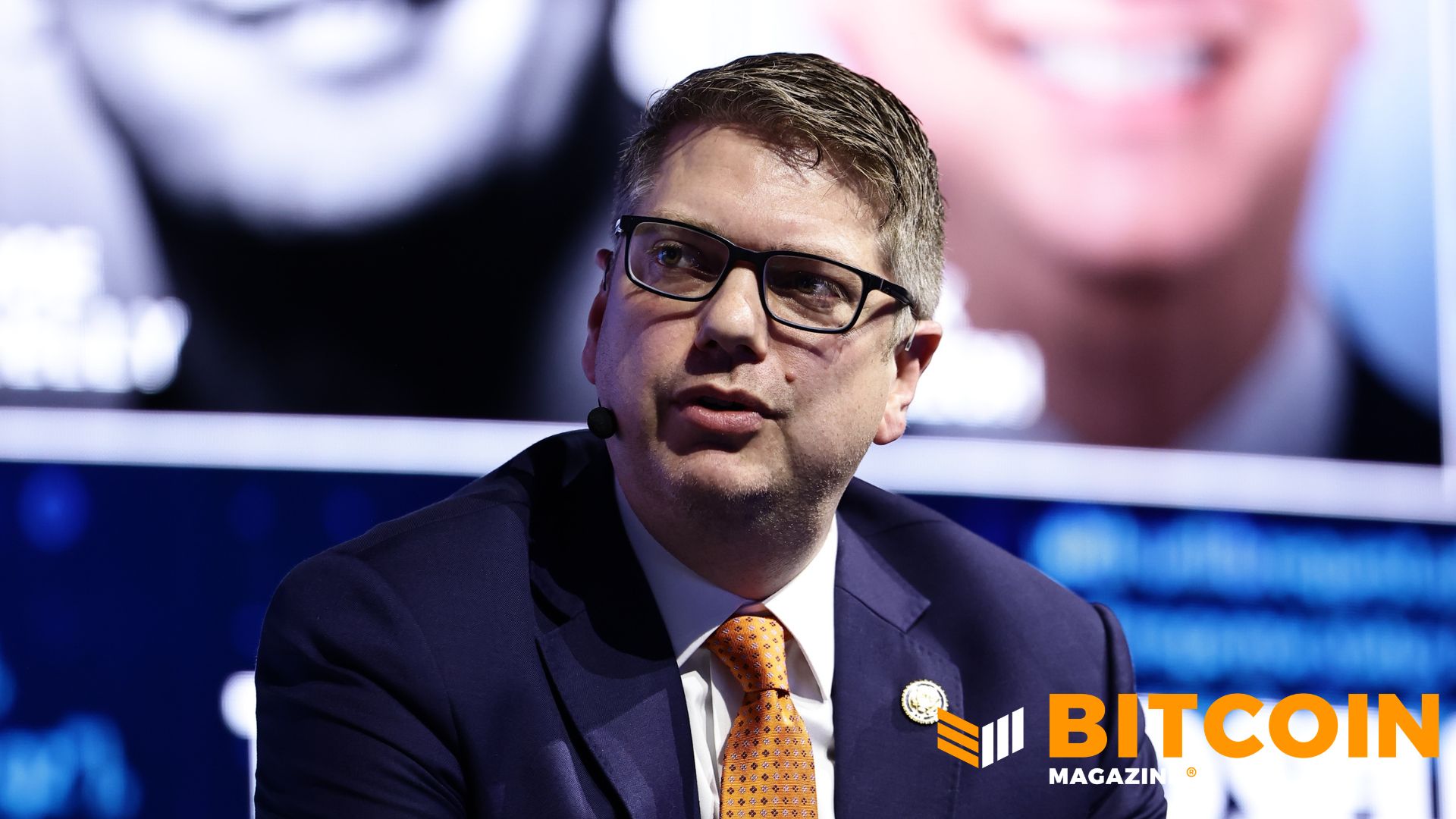
Congressman Nick Begich (R-AK) engaged in a comprehensive discussion with the Bitcoin Policy Institute at PubKey in New York, covering his journey from startup entrepreneur to member of Congress, along with the details of his significant proposal, the American Reserve Modernization Act, and the implications of artificial intelligence.
The interview provided valuable insights into one of Congress’s more technologically adept members—a trait that Begich attributes not to his political experience but to the years prior to his election.
Begich’s professional background is notably distinct from that of many of his colleagues. He completed his undergraduate degree in entrepreneurship at Baylor University and earned an MBA from Indiana University, specializing in information technology and decision sciences. Following a tenure at Ford Motor Company, he returned to Alaska to establish a software development enterprise.
Commencing operations with only a credit card and a laptop, he developed the company into a workforce of approximately 150 employees spanning three countries, focusing on assisting early-stage startups in transforming their ideas into viable products, often in exchange for equity stakes.
This entrepreneurial foundation, according to Begich, significantly influences his approach in Washington. “Congress can be a frustrating place,” he remarked. “You’re not a CEO. You can’t simply declare, ‘We’re doing this.’”
He drew a comparison between the consensus-building necessary in the House of Representatives and the challenges faced by startups, which include limited capital, established competition, and ongoing investor skepticism. However, he noted a critical distinction: in Congress, the timeline for success is measured in electoral cycles rather than funding rounds.
JUST IN: Congressman Nick Begich states that he introduced a Strategic Bitcoin Reserve bill due to the possibility that the world reserve currency “may not be the U.S. dollar forever.”
"It could be a digital asset."
pic.twitter.com/TIWd1NgDIa
— Bitcoin Magazine (@BitcoinMagazine) June 17, 2026

Arguments for a Strategic Bitcoin Reserve
Begich became involved with Bitcoin in early 2013, operating under the assumption that it could serve as a safeguard against inflationary pressures on the dollar for his business.
He experienced a significant loss of approximately 440 Bitcoin during the Mt. Gox incident—an experience he succinctly referred to as having been “Goxed.” Despite this setback, he emerged from the ordeal with a reinforced belief in the asset’s potential.
His conviction has been transformed into legislative form through the American Reserve Modernization Act (ARMA), which has gained considerable bipartisan support. This proposed legislation would enable the federal government to retain Bitcoin acquired through law enforcement efforts rather than liquidating it through auctions.
The underlying premise, as articulated by Begich, is straightforward: if Bitcoin can serve as a reserve asset for private enterprises, what possibilities does it hold for government use?
His argument hinges on two essential characteristics he deems necessary for reserve assets: scarcity and broad distribution. Gold meets these criteria; it is difficult to extract, and its widespread ownership has established a consensus regarding its value throughout history.
In his view, Bitcoin is nearing similar recognition within the digital asset realm, currently accounting for approximately 60 percent of the total cryptocurrency market capitalization.
“As network effects begin to manifest, the sooner one integrates into that cycle, the more competitive the position will be,” Begich asserted.
Additionally, he characterized ARMA as a protective measure—not a wager on Bitcoin’s supremacy, but rather a safeguard against the eventuality that the dollar may not sustain its status as the global reserve currency.
“Historically, every 93 years on average, the reserve currency transitions,” he noted, referencing previous shifts involving Portugal, Spain, France, and Britain. He argued that holding gold is a recognition of this reality; Bitcoin should similarly be perceived.
The Dual Facets of Artificial Intelligence
The dialogue eventually transitioned to artificial intelligence, where Begich exhibited a balanced yet candid perspective regarding the associated risks and benefits. He outlined two contrasting visions for the future shaped by AI: one characterized by abundance—offering more affordable healthcare, enhanced productivity, and greater economic access—and another marked by widespread displacement, leading to what he termed “a disintermediation of purpose.”
Regarding the concept of open-source AI models, Begich expressed reservations about the notion that openness equates to unqualified benefit at advanced capability levels. He drew parallels to the rationale behind regulating nuclear and specific biotechnological research—certain asymmetric risks, once unleashed, cannot be controlled.
“The genie is out of the box,” he remarked in reference to the broader AI landscape but contended that fully open-sourcing cutting-edge models, especially those concerning post-AGI systems, equips malicious actors with tools capable of causing unbounded harm.
He was particularly critical of China’s strategy concerning open-source models, suggesting that it operates less as a gesture of transparency and more as an economic maneuver to undermine American AI investment and destabilize the domestic ecosystem from external influences.

Thank you for visiting our site. You can get the latest Information and Editorials on our site regarding bitcoins.

