


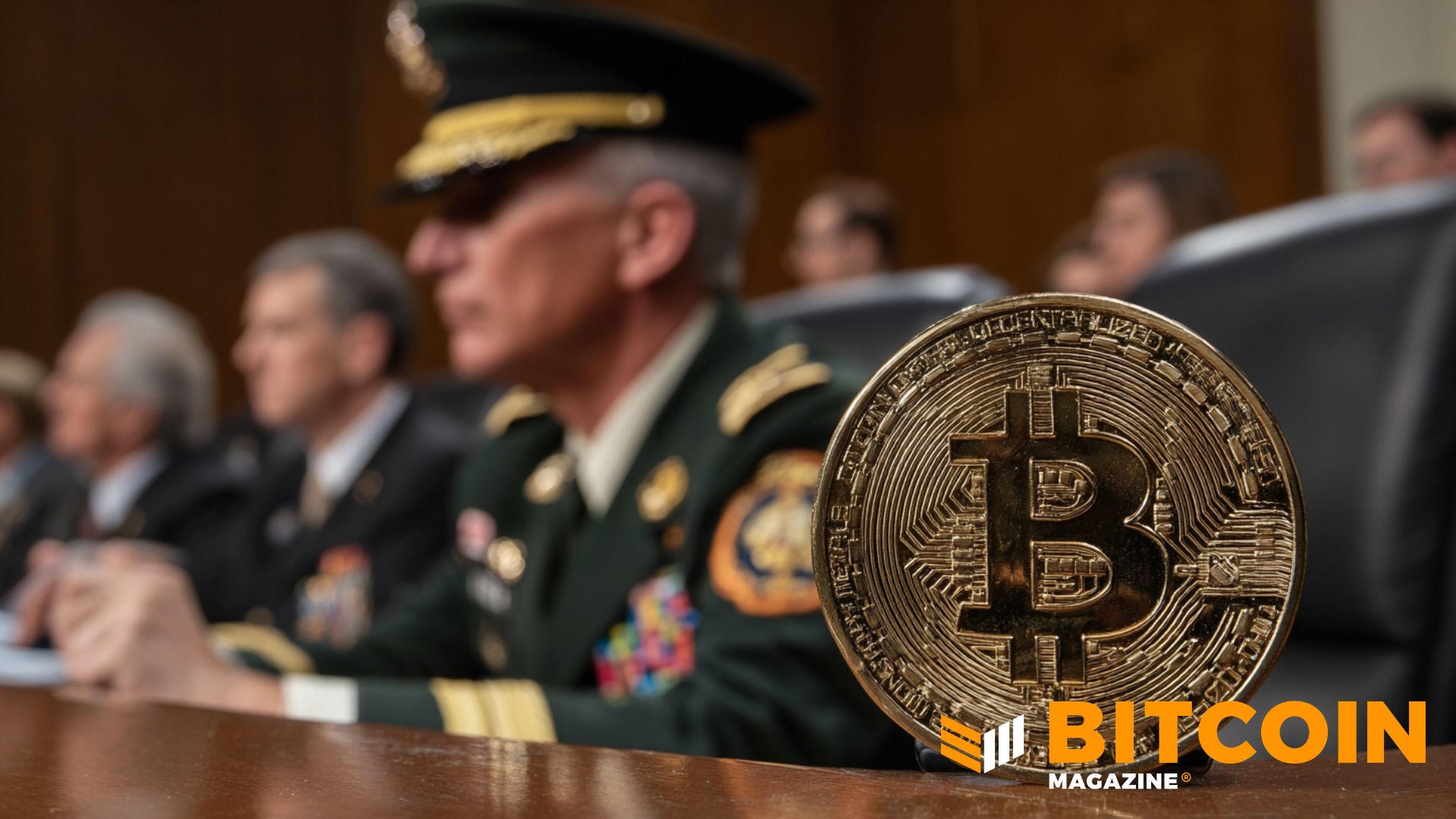
Admiral Samuel Paparo, the commander of U.S. Indo-Pacific Command (INDOPACOM), recently articulated the view that Bitcoin constitutes a “valuable computer science tool as power projection.” This perspective marks a significant endorsement of the cryptocurrency from a senior military figure within the United States.
These remarks were made during a defense authorization hearing for fiscal year 2027 on April 21, 2026, where Senator Tommy Tuberville (R-AL) inquired whether the leadership around Bitcoin provides the United States a strategic advantage against China in the Indo-Pacific region.
Admiral Paparo asserted, “Bitcoin is a reality. It’s a peer-to-peer, zero-trust transfer of value. Anything that supports all instruments of national power for the United States of America is to the good.”
The Admiral emphasized INDOPACOM’s focus on the underlying computer science architecture of Bitcoin, which encompasses cryptography, blockchain technology, and proof-of-work protocols. He noted that these protocols entail costs that extend beyond mere network security, thus impacting both offensive and defensive cyber operations.
Space Force Major Jason Lowery, a national defense fellow at MIT, has long advocated that Bitcoin’s proof-of-work mechanism can serve as a deterrent against cyberattacks by imposing tangible, energy-based costs on adversaries, similar to the way conventional military assets deter physical threats.
Senator Tuberville’s inquiries highlighted the strategic implications of Bitcoin in the context of great-power competition. He pointed out that the Chinese Communist Party’s leading monetary research institute had published a paper evaluating Bitcoin as a strategic asset.
Specifically, China’s International Monetary Institute released a report entitled “The Case for Bitcoin as a Reserve Asset,” suggesting that Bitcoin is evolving from a speculative instrument to a strategic reserve consideration, signaling the Chinese government’s awareness of U.S. actions.
Notably, on March 6, 2025, President Trump signed an executive order establishing the Strategic Bitcoin Reserve, which was initially seeded with Bitcoin obtained through criminal and civil asset forfeiture. This directive stipulated that government-held Bitcoin would be retained as long-term reserve assets—conceptualized by crypto policy advisor David Sacks as “a digital Fort Knox.”
Moreover, Senator Tuberville co-sponsored the BITCOIN Act with Senator Cynthia Lummis (R-WY) in March 2025, seeking to mandate the Treasury to accumulate one million Bitcoin over time, paralleling the scale of U.S. gold reserves.
During the open hearing, Admiral Paparo opted not to provide specific legislative recommendations, expressing a preference to submit formal written comments and to engage in more detailed discussions in a classified setting.

Thank you for visiting our site. You can get the latest Information and Editorials on our site regarding bitcoins.

